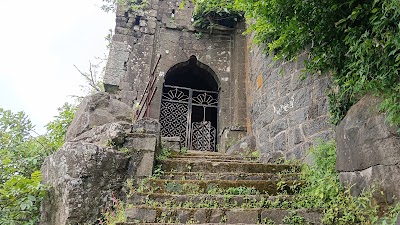
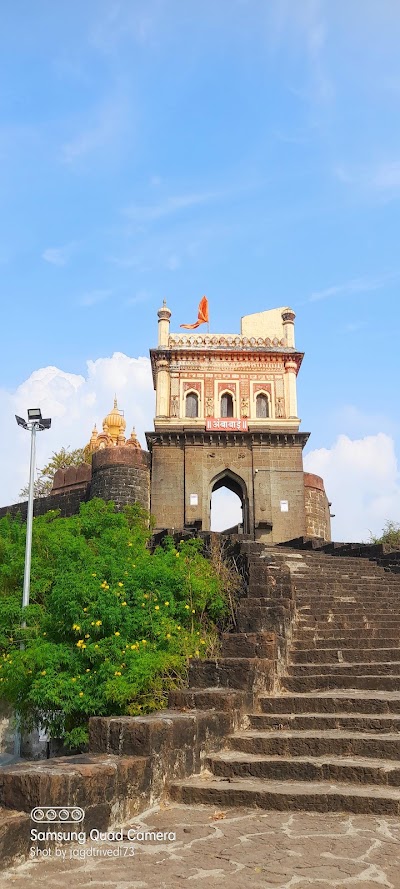
Kalyangad Fort (also known as Nandgiri Fort) is a historical hill fort located about 26.6 km northeast of Satara in the Koregaon taluka. Perched at an elevation of approximately 3,500 feet (1,070 meters) at the spur of the Mahadev mountain range, it makes for a smooth, scenic short motorcycle or car ride followed by an easy-to-moderate trek.
Fort History & Strategic Significance
Shilahara Origins (1178–1209 AD): The fort was constructed by King Bhoj II of the Shilahara dynasty, who built a network of defense outposts along the Mahadev mountain range (including Panhala, Chandan-Vandan, and Satara fort). Originally named Nandgiri, it served as a key eastern outpost to monitor trade routes through the Koregaon valley.
Maratha Conquest (1673 AD): Chhatrapati Shivaji Maharaj captured Nandgiri in 1673 during his expansion into the Satara belt. The fort was integrated into the Maratha defense perimeter and renamed Kalyangad.
Peshwa Period & Saint Connection: During the Peshwa rule, the fort was administered by the Pant Pratinidhi. It holds religious significance due to its connection with Kalyan Swami, the prominent disciple of Samarth Ramdas Swami, who spent time meditating on the hill.
British Fall (1818 AD): In April 1818, during the Third Anglo-Maratha War, British forces under General Pritzler laid siege to Kalyangad. The garrison surrendered shortly after. Major Price, a British officer, noted in his logs that the fortress's unique elevated ridge resembled the hull of a massive warship from afar.
Mahadarwaja (Main Entrance): Stone arches and flanking bastions at the northern end of the fort plateau. Pillared Cave Cistern: A large rock-cut cave filled with natural spring water, supported by ancient carved stone pillars. It houses idols of Lord Dattatreya and the 23rd Jain Tirthankara, Lord Parshvanath (reflecting the Shilahara era's Jain patronage). Kalyan Swami Temple / Memorial: A shrine dedicated to Kalyan Swami located near the center of the plateau. Perimeter Viewpoint: Offers line-of-sight views of Chandan-Vandan Forts to the north, Jarandeshwar to the east, and Ajinkyatara to the south.
★ 4.4